Dispensationalism
-

They built arks, left homelands, and offered sons on the basis of promises they would not live to receive. Hebrews 11 parades these witnesses before us not as ethnic heroes but as people who looked past the earthly to the heavenly — strangers and exiles reaching for a city God himself designed. They were looking…
-

There were no chairs in the tabernacle — the priests stood because the work was never done. Christ sat down. Hebrews 10 presses that image to its conclusion: one sacrifice, sin dealt with once for all, the veil torn open, the way into God’s presence clear. Draw near. Hold fast. Press on together. We are…
-

Once a year, the high priest went behind the veil alone, with borrowed blood, for a reprieve that would need repeating. Christ entered the Most Holy Place with his own blood and obtained eternal redemption — once, not annually. Hebrews 9 declares the sacrifice final, the covenant in effect, and the veil torn. There is…
-

God quotes himself in Hebrews 8, calling his own covenant faulty and announcing its replacement. The new covenant is better in every way — administered by a better priest in the true heavenly sanctuary, written on hearts rather than stone, and open to all who believe. The old is obsolete. There is no going back.
-

Melchizedek appears once in Genesis — no genealogy, no death, no successor — and disappears. A thousand years later, Psalm 110 names him as the type of the eternal priest. Hebrews 7 pulls that thread hard: Christ’s priesthood is confirmed by God’s own oath, held permanently, and saves completely. The Levitical system was always pointing…
-

Israel never entered the rest God promised — not because the land was too far, but because unbelief kept them out. Hebrews 3–6 declares that the true rest, the true priesthood, and the true sanctuary are all found in Christ alone — the forerunner who has entered the veil and stays. The shadows borrowed their…
-

The opening verses of Hebrews crash over you: God has spoken his final Word — not in fragments, but in a Son who is the radiance of his glory, the heir of all things, seated in majesty. Everything the church needs to know about Israel, covenant, and inheritance is answered here. In him. Completely. Once…
-
Every argument the New Testament makes about the Israel of God reaches back into the Old Testament for its foundation. This appendix maps those connections — book by book, passage by passage — showing how the NT writers deploy Genesis, Exodus, Isaiah, Jeremiah, and the Psalms to define God’s people as all who believe in…
-
From Matthew’s genealogy to Revelation’s doxology, the New Testament speaks with a single voice: God’s people are defined by faith in Jesus Christ, not by bloodline. This concluding post maps the entire journey — every NT book, the key passages, the Jewish categories opened to the world — and asks the question the series has…
-
Revelation is not an escape plan. It is a coronation. From the Lamb on the throne to the New Jerusalem descending like a bride, John’s vision is a sustained announcement that Jesus has won — and that his victory belongs to a people from every tribe, tongue, people, and nation. Every image dispensationalism reads as…
-
Jude sits near the back of the New Testament like a burning flare — short, urgent, blazing with Old Testament fire. In twenty-five verses he reaches into Israel’s story — the exodus, the wilderness, Sodom, Enoch, Moses — and wields it as warning and encouragement for a multiethnic church. The called, the beloved, the kept,…
-
John writes as an old man who has been carrying something the world needs to hear: that the eternal life which was with the Father has appeared — and it has appeared for everyone. In 1, 2, and 3 John, every covenant category that once belonged to Israel — sonship, atonement, the presence of God,…
-

Peter takes Israel’s most distinctly covenantal vocabulary — chosen race, royal priesthood, holy nation, treasured possession — and hands it to a multi-ethnic diaspora church without qualification. This session closes the New Testament survey at what may be its single most concentrated verse: 1 Peter 2:9–10.
-

Zion has three layers — a hill, a throne, and a heavenly city Hebrews says believers have already reached. Christian Zionism and dispensationalism make the same mistake: they freeze on the first layer and miss the other two.
-
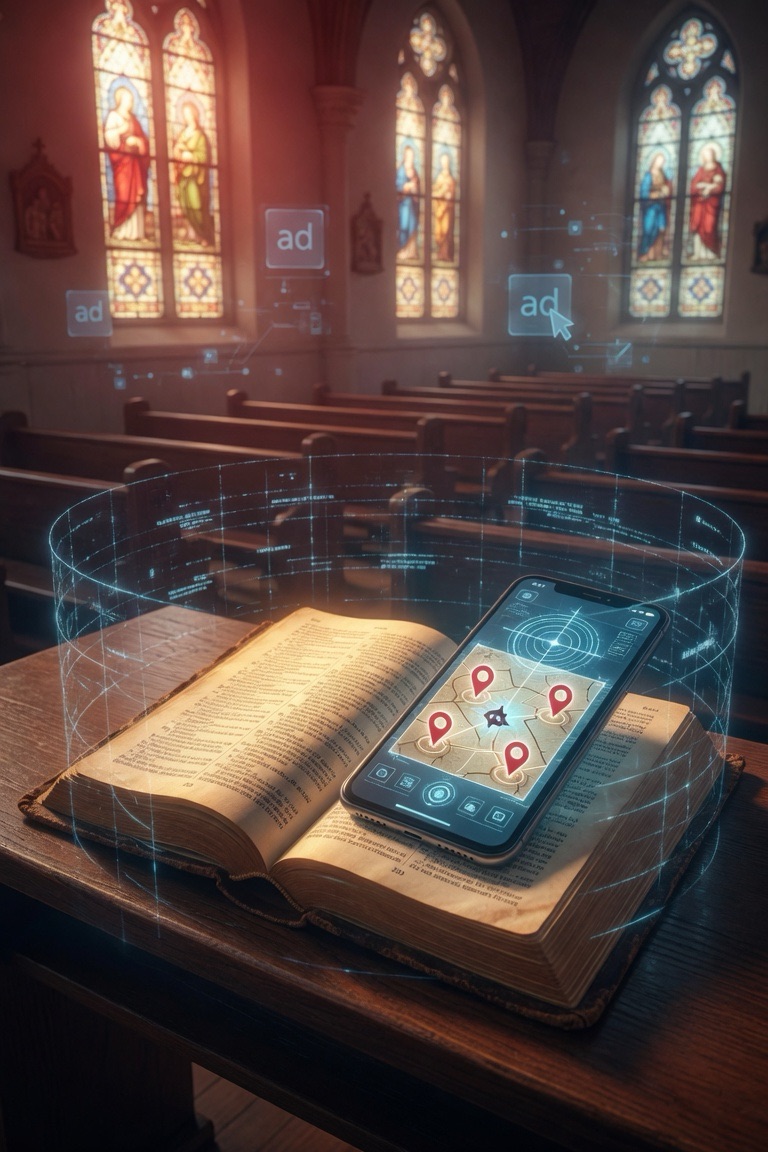
Last September, a California PR firm filed a sworn federal disclosure: Israel’s Foreign Ministry was paying to geofence hundreds of American churches and pay pastors to spread pro-Israel messaging — without those churches’ knowledge. Here’s what the actual document says, what it doesn’t, and why this particular audience was chosen.
-
Peter writes to scattered strangers in five Roman provinces and calls them a chosen race, a royal priesthood, a holy nation. These are Israel’s titles — and Peter gives them to the church without qualification. Not as a replacement for Israel’s story, but as its fulfillment: a people born again through the resurrection of Christ,…
-
James writes to “the twelve tribes in the Dispersion” — and then proceeds to pour the entire vocabulary of Israel into a mold shaped by Jesus. Tribe, synagogue, Abraham, kingdom, the royal law: each one stretched beyond ethnic boundaries to encompass every person who trusts the Lord of glory. The Israel of God in James…
-

The tabernacle was not the beginning of something — it was the materialization in time and space of something that always was. The fundamental interpretive error of unbelieving Israel and confused dispensationalism alike is mistaking the shadow for the source.
-
Hebrews does something remarkable: it takes the entire scaffolding of Israel — the covenant, the priesthood, the city, the sacrifice, the heroes of faith — and shows that it was always pointing beyond itself to Christ, and through Christ, to a people defined not by blood but by faith.
-
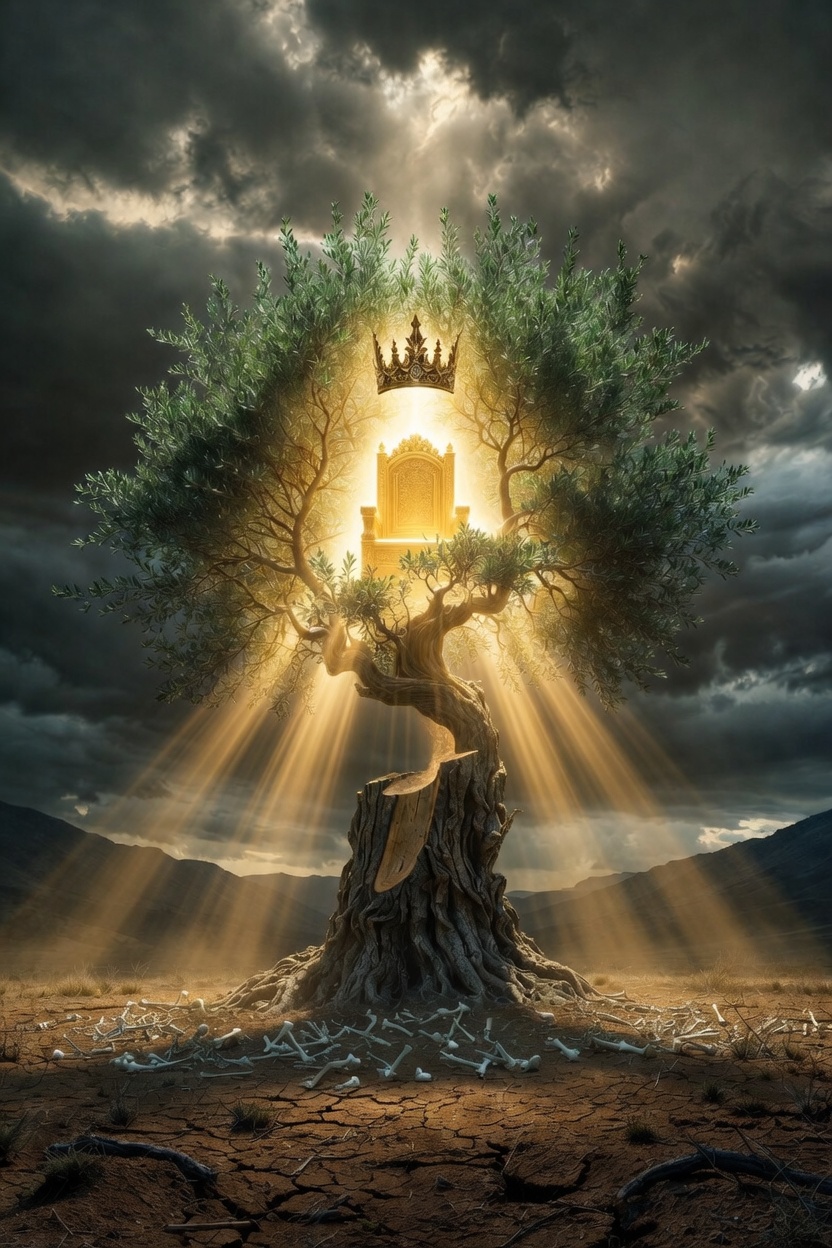
Many view the Church as a temporary parenthesis while God’s plan for ethnic Israel pauses, awaiting a future restart of shadows. Scripture instead reveals Christ as the Branch, Priest-King, and Temple-builder who fulfills all. The olive tree thrives by faith, not ethnicity; shadows end when the Substance arrives.