olive tree
-

The church embodies the true Israel now—one unified, multi-ethnic people in the “already/not yet” kingdom. As fellow citizens and temple, believers steward faithfully, pursue mission, provoke jealousy through love, and live with new-creation hope until full consummation in Christ.
-
Paul does not leave us suspended in the present age — he lifts our gaze to the final consummation. Creation groans, but it groans with expectation. The Israel of God, Jew and Gentile together, will inherit a renewed cosmos where God is all in all. That glory has a face, and His name is Jesus.
-
Paul’s love for ethnic Israel is raw, pastoral, and urgent — yet it never wavers from the truth that salvation comes only through faith in Christ. In this lesson we sit with Paul’s anguish in Romans 9–11 and discover that God has not rejected His people. The same grace that saved us can still save…
-
The new covenant makes the old obsolete (Hebrews 8:13); Christ’s cross creates one new humanity (Ephesians 2:14-16), demolishing divisions. God has one unified plan—no separate futures for Israel and church—fulfilling promises in the multi-ethnic body of Christ as the true people of God.
-
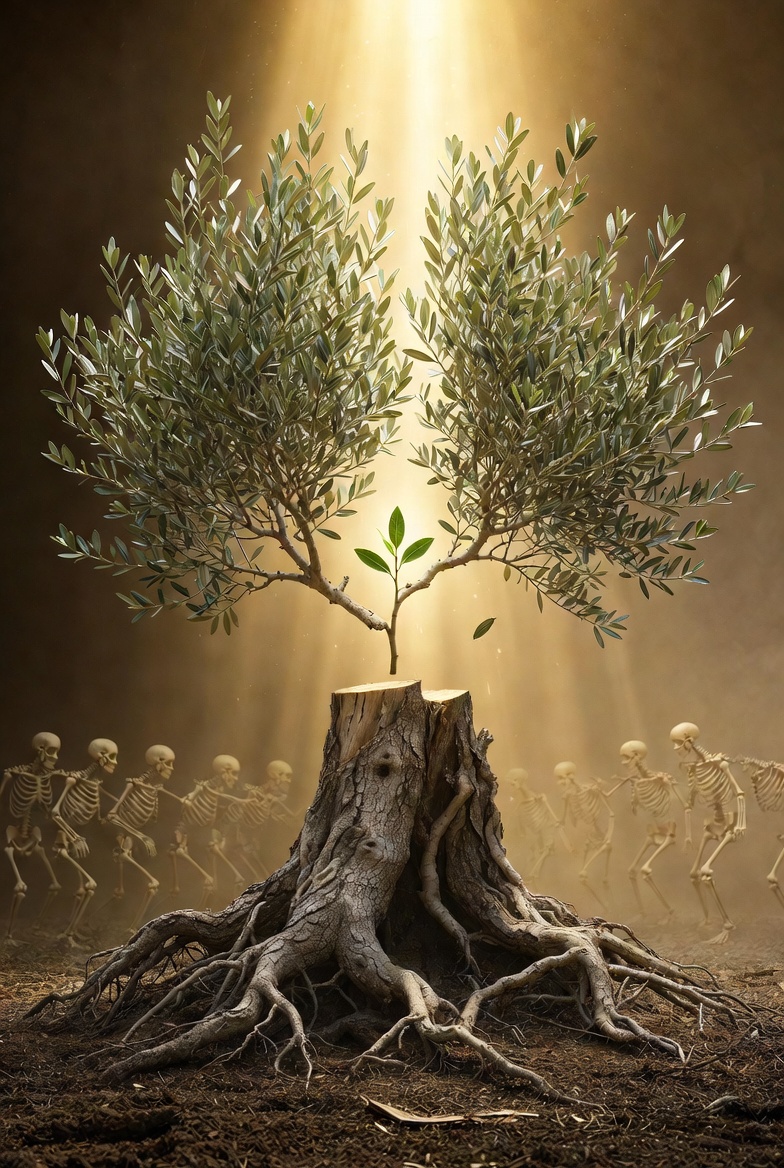
Paul shows in Romans 11 that the Israel of God is one unified elect people. Using the single olive tree metaphor, he explains how unbelieving Jews are broken off, believing Gentiles grafted in, and natural branches can be regrafted by faith. The fullness of the Gentiles completes this one people so that “all Israel will…
-
The prophets pictured the Israel of God as a cut-down tree with a holy stump, a royal-priestly Branch (Christ), and dry bones raised to life by the Spirit. These images illuminate Romans 11’s olive tree: one resurrected people in Christ where Jews and Gentiles are joined as the new-creation Israel of God.
-
Paul affirms God has not rejected Israel, showing a believing remnant and one olive tree where Gentile wild branches graft in by faith. The shared root (Christ) prohibits arrogance; “all Israel” (elect remnant) will be saved, uniting Jews and Gentiles in one body.
-
Isaiah’s eternal king fulfills in Jesus’ resurrection; the kingdom is present now (“time fulfilled,” Mark 1:15) yet awaits consummation. Paul’s Christ-centered eschatology calls believers to faithful stewardship in this overlapping age, expanding from ethnic hope to worldwide reality under Jesus’ rule.
-
The call to holiness transitions from external law to Spirit-written internal transformation (Jeremiah 31:33). New covenant living reflects kingdom scope over all life, with persistent prayer and Melchizedek inclusion welcoming Gentiles, previewing comprehensive new creation holiness empowered by the Spirit.
-
Abraham’s land promise expands beyond physical territory to cosmic inheritance of the renewed world through faith (Romans 4:13). It shadows greater reality in Christ, whose universal authority fulfills Old Testament types, redefining inheritance as participation in the new creation for all believers.
-
Jesus shifts worship from physical locations and old covenant shadows to spirit and truth (John 4:24). His once-for-all sacrifice perfects believers; the Spirit empowers authentic, location-free worship everywhere, fulfilling temple types and inaugurating kingdom reality through Christ’s superior priesthood.
-

The first three weeks lay the foundation: Scripture tells one story centered on Christ. The Israel of God is the new-creation people — Jew and Gentile united by faith. The kingdom has come in the King, not postponed. Old Testament signs find their reality in Jesus, correcting ethnic-only views of God’s people.
-
The first three weeks lay the foundation: Scripture tells one story centered on Christ. The Israel of God is the new-creation people — Jew and Gentile united by faith. The kingdom has come in the King, not postponed. Old Testament signs find their reality in Jesus, correcting ethnic-only views of God’s people.
-
Week 3 traced God’s covenants from Genesis 12 (Abrahamic) through Jeremiah 31 (New Covenant) to the Great Commission in Matthew 28. We saw continuity and discontinuity in redemptive history, with every promise pointing forward to Christ and the multi-ethnic new creation people He is forming.
-
Week 2 examined Galatians 6:16 and Romans 9:6-8. Paul declares that those who walk by the “rule” of new creation in Christ are the true Israel of God — one unified people, not two. Ethnic markers no longer define God’s family; belonging comes through faith, election, and the promise fulfilled in Jesus.
-
In the opening session of The Israel of God, we explored what “the Israel of God” means. Moving beyond dispensational views, we saw Scripture as one continuous story centered on Christ. Using John 3 and Nicodemus, we learned the kingdom is about new creation and restored fellowship with God for all nations, not ethnic privilege.
-
Paul redefines Abraham’s descendants and “Israel of God” by faith in Christ alone (Galatians 3:28-29). Jesus and Peter apply Old Testament Israel titles to the multi-ethnic church, creating one unified people where ethnicity yields to belonging in Christ, excluding nationalistic exclusivism.
-
The Abrahamic and new covenants fulfill in Christ, blessing all nations through heart transformation and global discipleship. Promises exceed ethnicity, uniting Jews and Gentiles in one people via Jesus’ perfect fulfillment and the Great Commission, revealing God’s eschatological plan for unified redemption.
-
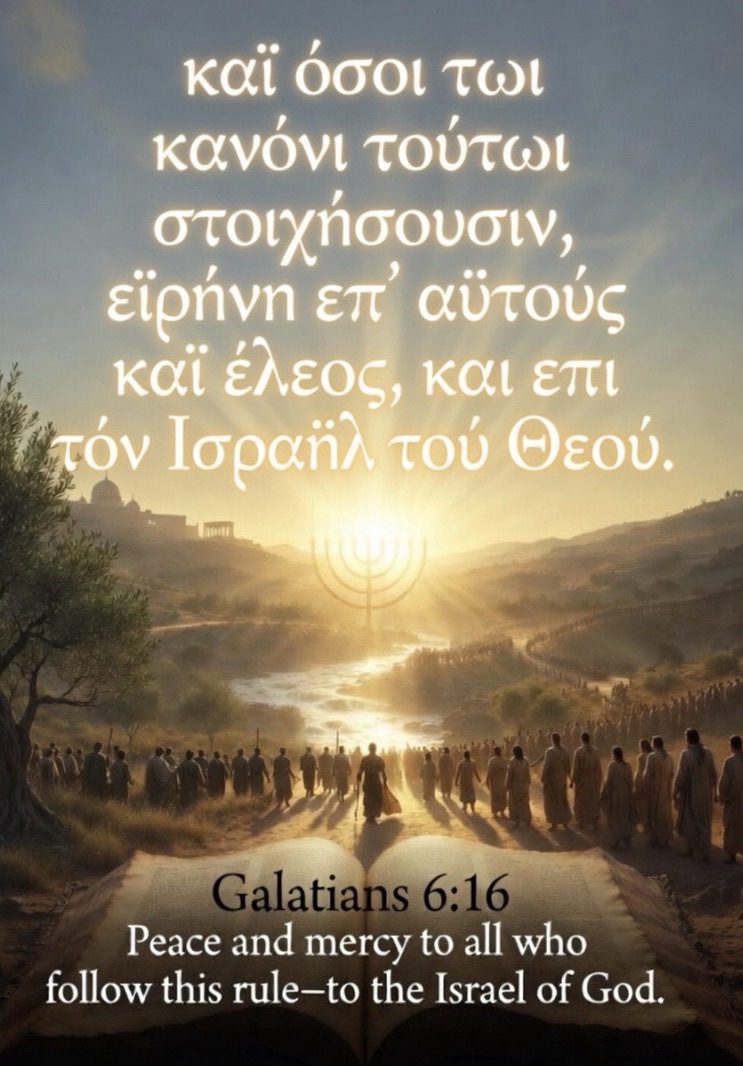
Galatians 6:16 pronounces peace and mercy on “the Israel of God.” Through simple Greek analysis, Paul shows it is not two separate groups but one unified new-creation people: believing Jews and Gentiles together as the church. No spiritual separation remains—they are identically the true Israel in Christ, one body and one bride.
-
Paul redefines “Israel” and God’s kingdom through faith in Christ, not ethnicity. Key texts like Galatians 6:16 and Romans 9:6-8 show true Israel as children of promise. Jesus inaugurates this new era; the series challenges ethnic views, fostering hope and unity among believers.