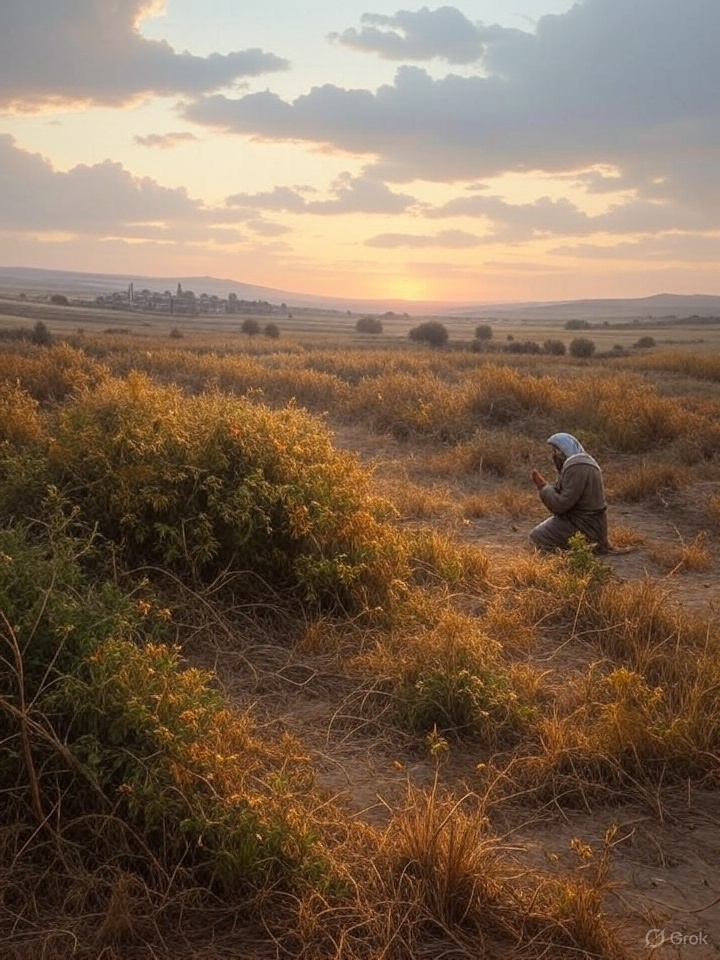
In Daniel 9, we find Daniel pleading with God for mercy as the Babylonian exile nears its end, reflecting on the 70 years of captivity foretold by Jeremiah. This chapter connects deeply with the theme of the land’s Sabbath rest, revealing how Judah’s failure to honor God’s commands led to exile, yet also pointing to a greater hope of restoration through God’s redemptive plan. The Sabbath rest, neglected for centuries, is central to understanding the exile’s purpose, as outlined in 2 Chronicles 36:20-21. Let’s explore how this passage, rooted in the consequences of disobedience, ties to Daniel’s prayer and God’s faithfulness.
The Bible often reveals profound truths through the consequences of disobedience, and one striking example is found in 2 Chronicles 36:20-21:
“He carried into exile to Babylon those who had escaped from the sword, and they became servants to him and to his sons until the kingdom of Persia came to power. The land enjoyed its sabbath rests; all the time of its desolation it rested, until the seventy years were completed in fulfillment of the word of the Lord spoken by Jeremiah.”
This passage points to the Babylonian exile, a pivotal moment in Judah’s history when the people were taken captive due to their persistent disobedience to God. Among their failures was neglecting the Sabbath rests for the land, a divine command outlined in Leviticus 25:1-7. Every seventh year, God instructed Israel to let the land lie fallow—no sowing or reaping—to honor Him, trust His provision, and allow the land to recover. This Sabbath year was a rhythm of dependence and stewardship, reflecting God’s care for both His people and creation.
The Consequences of Disobedience
God’s command came with a warning, detailed in Leviticus 26:34-35:
“Then the land will enjoy its sabbath rests throughout the time of its desolation, while you are in the land of your enemies. Then the land will rest and enjoy its sabbaths. As long as it lies desolate, it will have the rest it did not have during the sabbaths you lived in it.”

Judah’s refusal to observe these Sabbath years showed a lack of trust in God’s provision, prioritizing their own efforts over His design. As a result, God enforced the rest they denied the land. According to 2 Chronicles 36:21, the land rested for 70 years during the exile, making up for the Sabbath years the people ignored. This fulfilled the prophecy of Jeremiah 25:11-12 and 29:10, which foretold a 70-year captivity in Babylon.
How Long Did They Neglect the Sabbath?
While the Bible doesn’t explicitly state how long Judah neglected the Sabbath years, we can piece together an estimate. Leviticus 25:4 mandates a Sabbath rest every seventh year. If the 70-year exile compensated for missed Sabbath rests, it suggests the people neglected approximately 490 years of observance (since 70 Sabbath years, occurring every 7 years, would span 70 × 7 = 490 years). Scholars propose this period likely stretches from the time of the judges through the monarchy, roughly 1000 BC to 586 BC, when Jerusalem fell to Babylon. For centuries, Judah’s disobedience accumulated, leading to the exile as both judgment and restoration.
A Bigger Picture of God’s Faithfulness
The Babylonian exile wasn’t just punishment; it was part of God’s redemptive plan. The 70-year rest allowed the land to recover, fulfilling God’s covenant and Jeremiah’s prophecy. It also served as a reset for His people, calling them back to faithfulness. This story reminds us that God’s commands are not arbitrary—they reflect His wisdom and care. Ignoring them may bring consequences, but even in judgment, God works to restore.
What This Means for Us
The Sabbath rest for the land teaches us about trust, obedience, and stewardship. In a world that often prioritizes productivity over rest, Judah’s story challenges us to honor God’s rhythms in our lives. It also showcases His sovereignty—empires like Babylon rose and fell, but God’s purposes endured. As we reflect on 2 Chronicles 36:20-21 and Leviticus 26:34-35, let’s ask ourselves: Are we trusting God’s provision, or are we clinging to our own plans? The exile shows that God’s faithfulness prevails, calling us to live in alignment with His will.
Let this ancient lesson, echoed in Daniel’s prayer in Daniel 9, inspire us to rest in God’s promises, steward His creation wisely, and walk faithfully in obedience today.
Leave a Reply