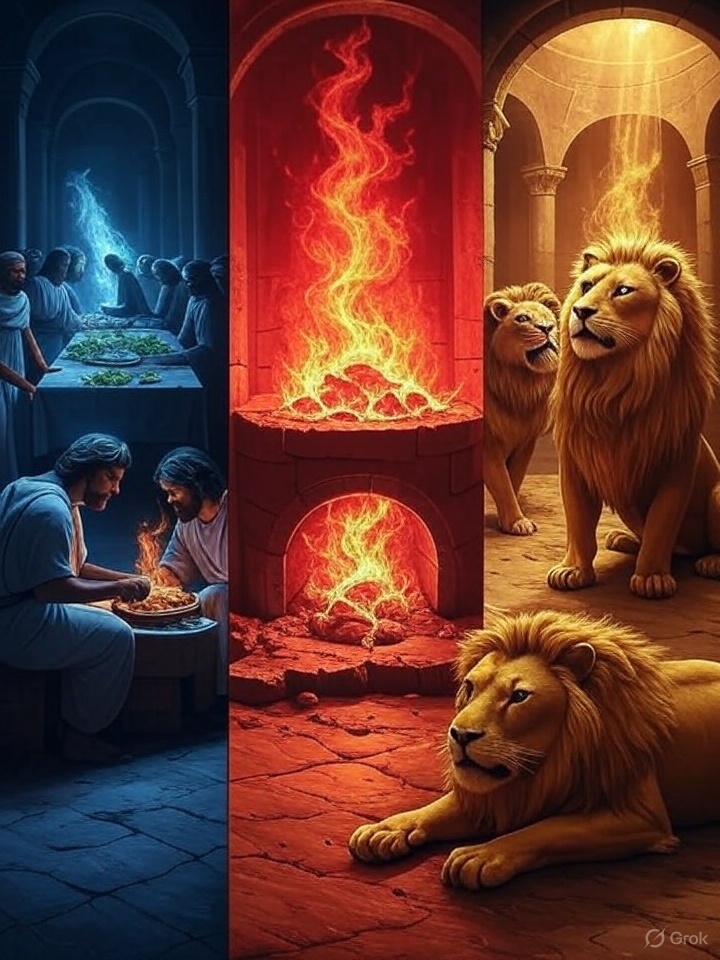
Welcome to Week 7 of Journey Through Daniel series, titled “Faith in the Fire: God’s Sovereignty in Exile”. This session explores the powerful narratives and visions of Daniel 1–7, revealing God’s unshakeable sovereignty over nations, His judgment on proud rulers, and the hope of His eternal kingdom. Through the chiastic structure of Daniel, we connect the exile to the Sabbath rest, Leviticus 25, Jeremiah’s 70-year prophecy, and the redemptive promise of Daniel 9’s seventy weeks. This blog post, based on the video’s transcript, invites you to reflect on how stories like the fiery furnace and lions’ den inspire faithfulness amid adversity and point to Jesus, the Son of Man.
The Heartbeat of Daniel: God’s Sovereignty
The lesson begins with a prayer thanking God for the hope found in Daniel’s visions, asking for inspiration to live faithfully in adversity. James Hamilton’s central theme anchors the study: God’s ultimate sovereignty over nations and rulers. No matter how powerful empires like Babylon or Rome appear, they are under God’s control, and His plan unfolds from exile to the establishment of His kingdom. This truth resonates through Daniel’s chiastic structure, which mirrors the broader biblical narrative of fall, exile, and redemption.
The Sabbath Rest and Exile: Leviticus to Daniel
Leviticus 25:1-7 sets the stage with God’s command for Israel to let the land rest every seventh year, a Sabbath of trust in His provision. After seven cycles (49 years), the Jubilee in the 50th year proclaimed freedom, debt cancellation, and restoration of land (Leviticus 25:8-10). This practice symbolized God’s ownership and His plan for ultimate restoration. However, Judah’s centuries-long neglect of these Sabbaths led to exile, as 2 Chronicles 36:20-21 explains, so the land could rest for 70 years, fulfilling Jeremiah’s prophecy (Jeremiah 25:11-12, 29:10).
Daniel, in his 80s, recognizes the end of this 70-year exile (605–536 BC) and prays for restoration (Daniel 9). Gabriel reveals a greater plan: “seventy weeks” (490 years), a symbolic tenfold Jubilee, pointing to the Messiah’s atonement (Daniel 9:24-27). This period, not a literal stopwatch, frames God’s redemptive purposes—atoning sin and establishing His kingdom through Jesus, not a delayed eschatological event as some dispensationalist views suggest.
The Chiastic Structure: A Tapestry of God’s Plan
James Hamilton’s structure highlights Daniel’s narrative symmetry, emphasizing God’s sovereignty, judgment, and deliverance:
- Chapter 1: Exile to the unclean realm.
- Chapter 2: Four kingdoms (Babylon, Medo-Persia, Greece, Rome) followed by God’s kingdom (stone).
- Chapter 3: Deliverance from the fiery furnace.
- Chapter 4: Humbling of Nebuchadnezzar.
- Chapter 5: Humbling of Belshazzar.
- Chapter 6: Deliverance from the lions’ den.
- Chapters 7–9: Four kingdoms, God’s kingdom.
- Chapters 10–12: Return from exile, resurrection.
This structure mirrors the biblical narrative, from the Fall (exile from Eden) to redemption through Christ’s kingdom. The central vision of Daniel 7—the Son of Man receiving dominion—anchors the book, showing God’s eternal reign. Chapters 1–6 (in Aramaic) focus on exile and earthly empires, while Chapters 7–12 (in Hebrew) shift to heavenly hope and resurrection.
Four Kingdoms: Symbols of Rebellion and God’s Triumph
Across Daniel 2, 7, 8, and 9, the four kingdoms—Babylon, Medo-Persia, Greece, Rome—are depicted through varied symbols:
- Daniel 2: A statue of gold, silver, bronze, iron, and clay, shattered by a stone (God’s kingdom).
- Daniel 7: Four beasts (lion, bear, leopard, terrifying beast), judged by the Ancient of Days, with the Son of Man reigning.
- Daniel 8: A ram (Medo-Persia) and goat (Greece), with the “little horn” (Antiochus IV) oppressing God’s people.
- Daniel 9: Implied kingdoms leading to the Messiah’s atonement.
These visions emphasize that empires rise and fall, but God’s kingdom, established through Jesus (the stone and Son of Man), triumphs eternally. Hamilton rejects dispensational gaps, arguing there’s “no divine oops”—God’s kingdom arrives with Christ, not postponed.
Deliverance: Faith in the Fire
Daniel 3 and 6 showcase God’s protection of the faithful:
- Fiery Furnace (Daniel 3): Shadrach, Meshach, and Abednego refuse to worship Nebuchadnezzar’s statue, facing a blazing furnace. A fourth figure, “like a son of the gods,” protects them, and they emerge unharmed, leading Nebuchadnezzar to praise God.
- Lions’ Den (Daniel 6): Daniel, under Darius, is thrown into a lions’ den for praying to God. An angel shuts the lions’ mouths, and Darius honors God, promoting Daniel.
As Hamilton notes, these stories inspire faithfulness, teaching that “God and His kingdom matter more than the preservation of one’s own life.” God’s power to deliver, seen in physical symbols like the furnace and lions’ den, points to the future resurrection and reward of the faithful (Daniel 12).
Humbling the Proud: Nebuchadnezzar and Belshazzar
Daniel 4 and 5 contrast God’s mercy and justice:
- Nebuchadnezzar (Daniel 4): His pride leads to a dream of a chopped tree, interpreted by Daniel. God humbles him with seven years of madness, but restores him when he repents, praising God’s eternal dominion.
- Belshazzar (Daniel 5): His blasphemy, misusing temple vessels, brings the handwriting on the wall, interpreted by Daniel. Immediate judgment follows—death and the loss of his kingdom.
These narratives, bracketed by deliverance stories, assure persecuted believers that God humbles proud rulers and saves the faithful. Symbols like the tree and handwriting bridge personal sin to national consequences, reinforcing God’s call to humility.
Why It Matters Today
Daniel 1–7 encourages us to:
- Trust God’s Sovereignty: Empires fade, but God’s kingdom endures, giving us confidence in His control over history.
- Stand Firm in Faith: Like Daniel and his companions, we’re called to faithfulness in adversity, trusting God’s deliverance.
- Repent and Hope: God’s mercy restores the repentant, while His justice judges the defiant, urging us to align with His kingdom.
The visions connect to the broader biblical narrative—from the Fall to Christ’s redemption—culminating in Jesus, who restores the garden-like relationship as the bride and city of God (Revelation 21–22).
Join the Journey
The Journey Through Daniel series, available on YouTube, unravels Daniel’s prophetic mysteries. Week 7 builds on lessons like Week 3: Cracking the Code, which introduces the chiastic structure, and Week 5: The Son of Man Revealed, focusing on Daniel 7’s messianic vision. It leads into Week 8: End-Time Battles, exploring Daniel 8–12’s apocalyptic visions.
The closing prayer urges us to live faithfully, trusting God’s sovereignty and identifying as citizens of His kingdom. How do Daniel’s stories of deliverance inspire your faith in trials? How does God’s sovereignty over history deepen your trust? Join us for Week 8 to explore the ram, goat, and little horn, and the spiritual warfare behind Daniel’s end-time visions.

Video Links for the Series:
Introduction: God’s Endgame: How Eschatology Shapes Salvation
Week 1: Unveiling Divine Wisdom: Exploring Daniel’s Biblical Theology
Week 2: From Exile to Redemption: Daniel’s Role in Salvation History
Week 3: Cracking the Code: Unveiling Daniel’s Chiastic Secrets
Week 4: Rise and Fall: The Triumph of God’s Eternal Kingdom
Week 5: The Son of Man Revealed: Decoding Daniel’s Messianic Vision
Week 6: Unraveling the 70 Weeks: Daniel’s Prophecy of Redemption
Week 7: Faith in the Fire: God’s Sovereignty in Exile
Week 8: End-Time Battles: Unraveling Daniel’s Visions of Spiritual Warfare
Leave a Reply to The Covenantal Framework – Paul’s Eschatological Unity – In light of eternityCancel reply