Dispensationalism
-
Philemon refutes ethnic exclusivity in God’s favor toward Israel, held by early Jewish unbelievers and dispensationalists, by expanding categories like “brother,” “fellowship,” and “in Christ” universally through faith in Christ. It redefines Israel as all believers—Jews and Gentiles—anchored to historical promises, including Gentiles as heirs.
-
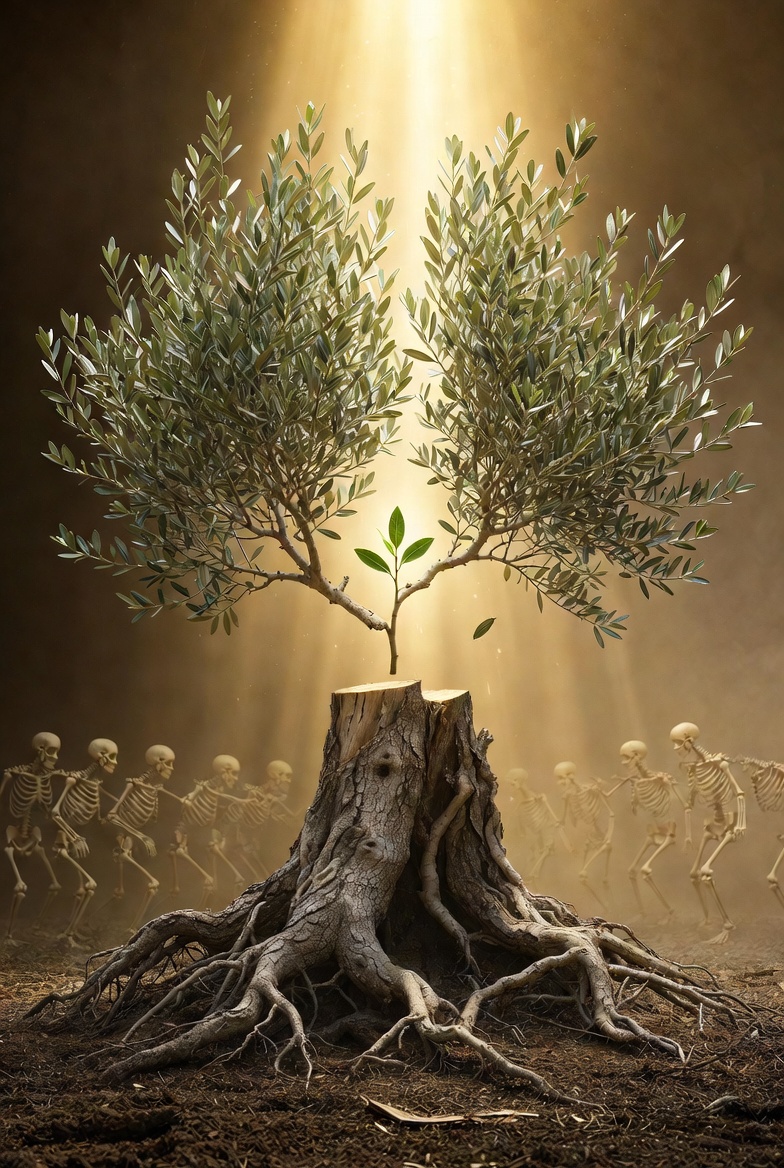
Paul shows in Romans 11 that the Israel of God is one unified elect people. Using the single olive tree metaphor, he explains how unbelieving Jews are broken off, believing Gentiles grafted in, and natural branches can be regrafted by faith. The fullness of the Gentiles completes this one people so that “all Israel will…
-
The prophets pictured the Israel of God as a cut-down tree with a holy stump, a royal-priestly Branch (Christ), and dry bones raised to life by the Spirit. These images illuminate Romans 11’s olive tree: one resurrected people in Christ where Jews and Gentiles are joined as the new-creation Israel of God.
-
Crete had a reputation. Paul quotes their own poet to make the point: liars, evil beasts, lazy gluttons. This is where Titus is sent to plant churches and establish elders. And in the letter Paul writes him, some of the most sweeping covenant language in the New Testament is addressed to these people — the…
-
Paul’s first instruction to Timothy as a young pastor in Ephesus was to stop certain people from teaching “myths and endless genealogies.” The false teaching threatening the Ephesian church was rooted in ethnic pedigree — in the idea that genealogical standing before God still mattered. Paul’s response was to anchor the whole pastoral enterprise in…
-
Paul had been in Thessalonica for perhaps three weeks when he was driven out of town. The church he left behind was weeks old, mostly Gentile, already under persecution. And in the letters he wrote them, he placed them — without qualification — inside the covenant story of Israel. Chosen. Called into the kingdom. Suffering…
-
The false teachers pressing in on the Colossian church had a sophisticated program: Christ plus calendar observance, Christ plus dietary rules, Christ plus circumcision, Christ plus angelic intermediaries. Paul’s answer was not a negotiation. It was a Christology so vast it left no room for additions. You have the fullness. The shadow has passed. The…
-
Paul wrote Philippians from a prison cell — and from that cell, he burned his résumé. Circumcised on the eighth day, Hebrew of Hebrews, blameless under the law. He had every ethnic credential dispensationalism says should matter. He called them loss. He called them dung. What Philippians teaches about Israel’s identity, it teaches by watching…
-
Ephesians is Paul’s most elevated letter — not a crisis response, not a defense, but a sustained act of wonder at what God has done in Christ. And what God has done, Paul says, is something hidden for ages: he has made Jew and Gentile into one new humanity, one body, fellow citizens of one…
-
Galatians is Paul’s most urgent letter — written in crisis, with churches on the verge of abandoning the gospel. The threat wasn’t outright paganism. It was something more insidious: adding circumcision to faith, ethnic markers to grace. Paul’s response is volcanic. He calls it “another gospel.” He pronounces a curse on anyone who preaches it.…
-
Corinth was a Roman port city — diverse, stratified, morally complex, and almost entirely Gentile. It was the last place you’d expect to find the heirs of Abraham. And yet Paul writes to the Corinthian church as though Israel’s entire covenantal history belongs to them: the Exodus is their story, the temple is their body,…
-
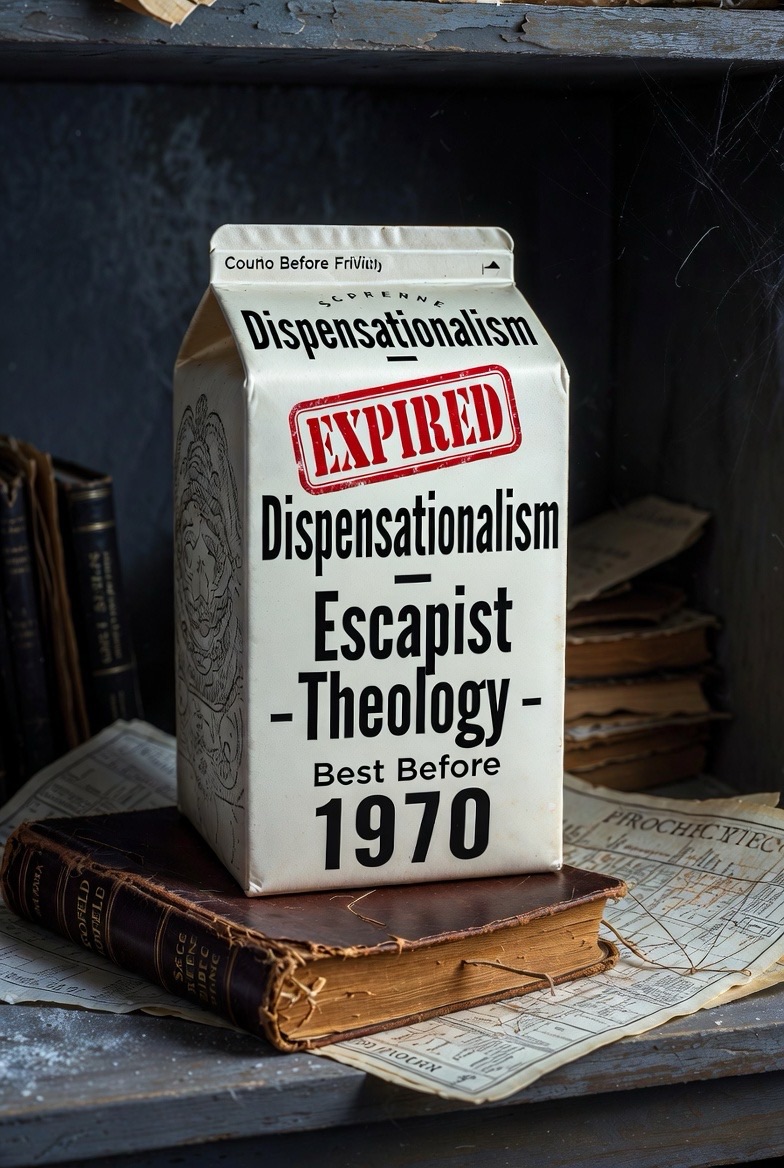
Daniel Hummel’s The Rise and Fall of Dispensationalism reveals how this theology surged in post-Civil War America by giving evangelicals a powerful escape from deep racial wounds. Through rapture promises and a postponed kingdom, it sidestepped painful realities. Today, amid George Floyd echoes and Israel-Iran tensions, younger generations see its cultural usefulness has fully expired.
-
Romans is Paul’s most sustained theological argument, and at its heart is a question he cannot avoid: if the gospel is for everyone who believes, what happens to the promises God made to Israel? Paul’s answer dismantles ethnic privilege from every angle — justification, Abraham’s fatherhood, circumcision, the olive tree, the remnant. Romans doesn’t just…
-
Acts doesn’t argue for the inclusion of the Gentiles — it shows it happening, event by event, city by city, in real time. A wind fills a room in Jerusalem. A Roman officer receives the Holy Spirit. A council in Jerusalem settles the question the whole church had been asking. Acts is the story of…
-

This introductory post launches a series on Daniel Hummel’s The Rise and Fall of Dispensationalism, highlighting its origins, meteoric rise, decline, and profound influence on American evangelicalism. Amid recent Iran war discussions, it emphasizes dispensationalism’s marketed, politically charged nature—beyond theology—as a cultural and commercial force shaping politics, missions, popular culture, and end-times views.
-
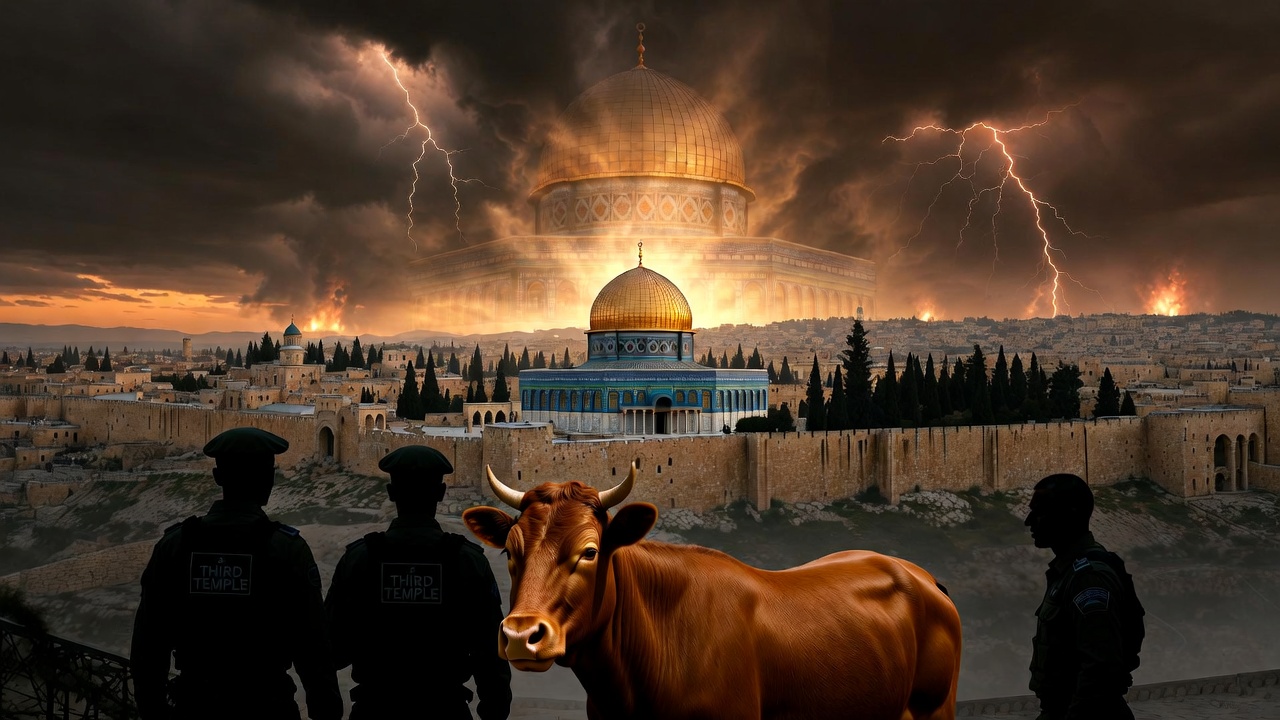
The series is complete — preparations documented, alliance mapped, theology examined, Scripture heard. This final post asks: what now? Five practical steps for the church: teach Christ’s present reign boldly, center the finished cross, pray for Israel’s gospel salvation, reject fear-based prophecy speculation, and live as the true Temple and one new humanity in Christ.
-
This post names what dispensationalism costs when it collides with real life: a functional denial of Christ’s current reign, a collision with the one new humanity the new covenant creates, the promotion of idolatry in unbelieving Israel, and real-world dangers when millions are taught that Middle East conflict is prophetically necessary. The hope of the…
-
After examining the alliance, the numbers, and the dispensational framework, this post lets Scripture speak without the filter. Jesus has all authority now. He is seated and reigning. The true Temple is his people. The sacrifice is finished. The King is on the throne — not waiting for a building project in Jerusalem.
-
John doesn’t begin with a genealogy or a birth story. He begins before creation: “In the beginning was the Word.” From that opening note, everything in John operates at maximum theological depth — and that includes his demolition of ethnic religion. The true light enlightens everyone. God’s children are born not of blood but of…
-
Dispensational premillennialism rests on a single claim: God’s kingdom plan for Israel was postponed when they rejected Christ, inserting the church age as a temporary parenthesis. This post unpacks how the system works, the proof texts it relies on, and why even progressive dispensationalists admit the current reign of Christ is — in their view…