Dispensationalism
-
CUFI has more organized members than there are Jewish people in the United States. 73% of evangelicals tie current Middle East events to Revelation. 62% of pastors expect a literal Third Temple. This post maps the scale of the movement, the sharp generational divide already underway, and why the numbers insulate a flawed theology from…
-
Behind the Temple Institute’s preparations stands a coordinated alliance: American megachurch pastors, Christian Zionist organizations with 10 million members, and dedicated Jewish Temple activists. This post maps the network, distinguishes it from Chabad’s very different approach, and explains why the partnership normalizes treating active military conflict as prophetic progress.
-
In a Jerusalem museum, a golden menorah waits. Sacred vessels, priestly garments, trained priests, and red heifer candidates are ready. The Temple Institute calls it an “advanced preparatory phase.” This post documents what has been built, who is driving it, and why a specific theological system — dispensational premillennialism — treats it all as prophetically…
-
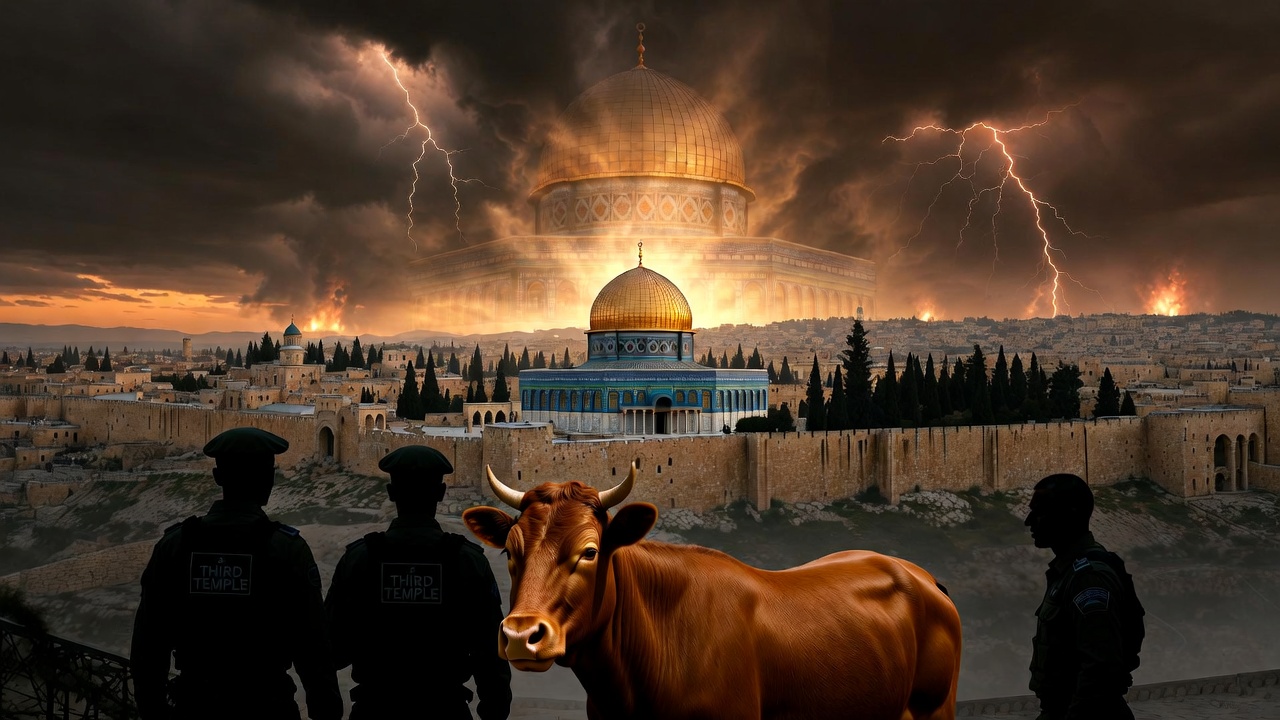
A pastor calls for a missile strike on the Dome of the Rock. IDF soldiers wear Third Temple patches. Ten million organized evangelicals fund preparations in Jerusalem. This series examines the theological system behind it all — dispensational premillennialism — and the biblical case for why the King is already on the throne.
-

Luke is the only Gentile author in the New Testament — and he knows it. Writing to Theophilus, he builds his Gospel around a single insistence: the salvation God prepared through Israel was always meant for the ends of the earth. Simeon sees it at the cradle. A Roman centurion demonstrates it in Capernaum. A…
-
Mark is the shortest Gospel and the most urgent — a breathless account of Jesus on the move. But even in its compressed urgency, Mark makes room for Gentiles at every turn. A Syrophoenician mother. A Roman centurion. A temple meant for all nations. Mark’s Jesus is always bursting the ethnic boundaries his contemporaries tried…
-
Matthew opens with a genealogy and closes with a commission — and between those two bookends, he systematically dismantles the idea that God’s covenant belongs to one ethnic group. Jesus is Israel fulfilled, and the kingdom he inaugurates has no borders that blood can draw.
-
Dispensationalism’s controlling presupposition is that Israel is an ethnic group to whom God owes distinct, unfulfilled promises — and that these promises cannot be transferred to the church. From Darby to Scofield to progressive dispensationalists, the ethnic anchor holds. This post names that presupposition clearly, examines its key claims, and shows why the New Testament…
-
A reference appendix for the Defining Israel series — collecting the primary quotes from dispensational theologians, classical and progressive, that define Israel as an ethnic group and ground God’s covenant promises in physical descent from Abraham. Darby, Scofield, Chafer, Walvoord, Ryrie, Saucy, Bock, Blaising — with sources, context, and a summary table.
-
This series takes you on a book-by-book journey through the New Testament to answer one defining question: Who is Israel? We’ll see how God’s promises to Abraham find their fulfillment not in ethnic lineage, but in Jesus Christ — and in all who are united to Him by faith. Jews and Gentiles together, one people,…
-

This exploration of dispensationalism reveals a dynamic movement woven into the fabric of evangelical Christianity and American culture. Though its influence has shifted, its legacy remains potent, shaping theological discourse, politics, and popular culture. Discover the enduring impact of dispensationalism and its potential trajectories in the future.
-
Explore how dispensationalism has spread beyond its Western origins, influencing evangelical movements in Africa, Asia, and Latin America. Discover how the movement has adapted and contextualized its message to resonate with diverse cultures and theological traditions, leaving a lasting impact on global evangelicalism.
-
Explore the diverse eschatological perspectives within Christianity, including amillennialism, postmillennialism, and historic premillennialism. Understand how these views differ from dispensationalism in their interpretation of biblical prophecy and the nature of the Millennium, providing a broader context for understanding its unique contribution and challenges.
-
Explore the potential trajectories of dispensationalism in the 21st century, from possible resurgence or adaptation to its ongoing influence on evangelicalism and global impact. Consider the factors that may shape its future and the enduring legacy it leaves on Christian thought and practice.
-

Figs, Arks, and Faith explores how Jeremiah 24:4-10’s good figs, Noah’s ark, and John 3:16’s universal gospel reveal God’s plan to preserve a faithful remnant. Paul’s Romans 9-11 shows this remnant, defined by faith, expands from Israel to all creation through Christ, the ultimate ark, uniting the church.
-
Explore the various critiques leveled against dispensationalism, from its literal interpretation of Scripture and distinct roles for Israel and the Church to its perceived historical inaccuracies and practical implications. Examine how dispensationalists have responded to these challenges and adapted their theology.
-
Explore how dispensationalism has permeated popular culture, shaping public perceptions of the end times through books like “The Late Great Planet Earth” and the “Left Behind” series. Discover its influence on films, music, and broader cultural discourse.
-
Explore the fascinating relationship between dispensationalism and American politics, including its influence on Christian Zionism, the rise of the Religious Right, and foreign policy perspectives. Discover how dispensationalist beliefs have motivated political activism and shaped political discourse.
-

Isaiah 49 presents the Messiah as God’s true Servant, “Israel,” contrasting with the unfaithful nation. Jesus fulfills Israel’s mission, bringing salvation globally. Rejected by Israel, He becomes the cornerstone. God’s wrath targets Messiah-rejectors, not Israel itself. True Israel comprises those reborn in Christ, regardless of ethnicity.
-
Discover how dispensationalism’s unique eschatological framework has shaped evangelical approaches to missions and evangelism. Explore its emphasis on Jewish evangelism, the urgency of spreading the Gospel before the Tribulation, and its influence on missionary organizations and strategies.