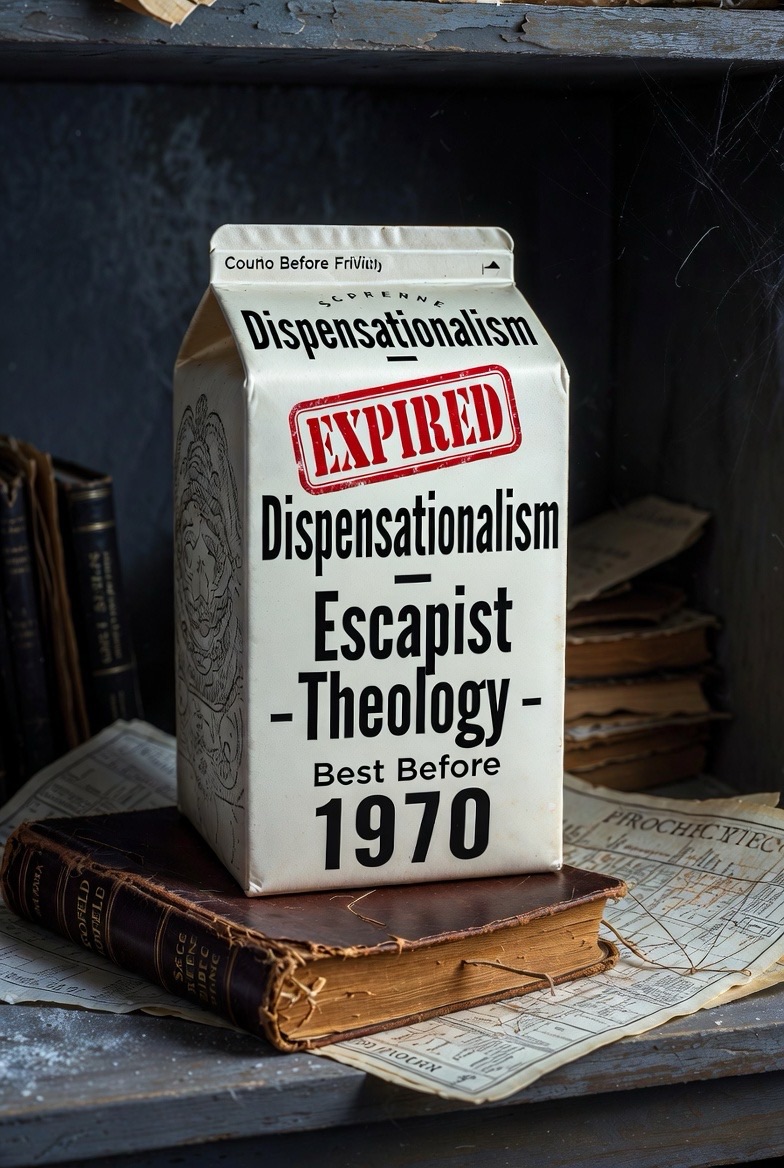
One of the most compelling aspects of Daniel G. Hummel’s The Rise and Fall of Dispensationalism (2023) is his careful historical analysis of how dispensational premillennialism took root and flourished in America—and why it is now in steep decline. Rather than focusing solely on its theological weaknesses (which have been well-documented), Hummel situates the movement within the unique social and cultural wounds of post-Civil War America.
After the devastation of 1861–1865, many white evangelicals faced a nation fractured by slavery, emancipation, and Reconstruction. Hummel shows how dispensationalism’s sharp distinctions—between Israel and the Church, between the present age and a future millennial kingdom—offered a powerful psychological and theological escape hatch. By emphasizing the imminent rapture, the “postponed” kingdom, and the futility of fixing a broken world, the system allowed believers to prioritize evangelism, personal piety, and North-South white reconciliation over the far messier work of racial justice and social reform. As Hummel notes, the institutional structures of early dispensationalism were forged by white evangelicals who “privileged the goal of white reconciliation after the Civil War over the aims of Reconstruction.” It was escapist theology perfectly suited to the moment: sidestep the painful realities here and now, and fix your eyes on the heavenly kingdom coming later.
This same framework proved remarkably resilient for over a century. It mainstreamed ideas like the pre-tribulation rapture and a future-focused Israel-centric eschatology into American evangelical culture through revivalism, Bible conferences, the Scofield Reference Bible, and later pop phenomena like the Left Behind series. Theological critiques often bounced off because, as Hummel argues, the system’s real power wasn’t its doctrinal precision but its cultural utility—it gave people a way to make sense of chaos without having to confront it head-on.
Fast-forward to our own era. The 2020 George Floyd protests and BLM movement exposed many of the same unresolved racial and social fractures that dispensationalism once helped sideline. Today, as tensions escalate around Israel and Iran, the landscape looks dramatically different. Younger generations of evangelicals—raised in the shadow of endless Middle East conflict, cultural polarization, and growing skepticism of politicized end-times speculation—are increasingly rejecting the old escapist categories. Support for a certain brand of Christian Zionism that treats modern Israel as the key to biblical prophecy feels less like faithful theology and more like a geopolitical “box canyon” with no easy exit. Hummel’s book, written before the most recent escalations, doesn’t address today’s headlines—but its historical outline makes the coming collapse of dispensationalism’s cultural dominance feel almost inevitable. The theological errors were always there; what sustained the system was its usefulness in a divided America. That usefulness is rapidly evaporating.
Hummel’s work is fair: he acknowledges that dispensationalism gave millions of Christians a coherent way to navigate post-Civil War trauma. But history shows that when a theology’s primary strength becomes its greatest liability, the fall is swift. We are watching that process unfold in real time.
What replaces it? That’s the open question.
What do you think—has dispensationalism’s cultural moment finally passed?

Leave a Reply