Let no one separate what God has joined together.
Baptism is often seen as a human acceptance of Christ’s promise of salvation, but it’s deeper significance lies in God’s actions rather than human initiative. Here are two key scriptural references that illustrate this:
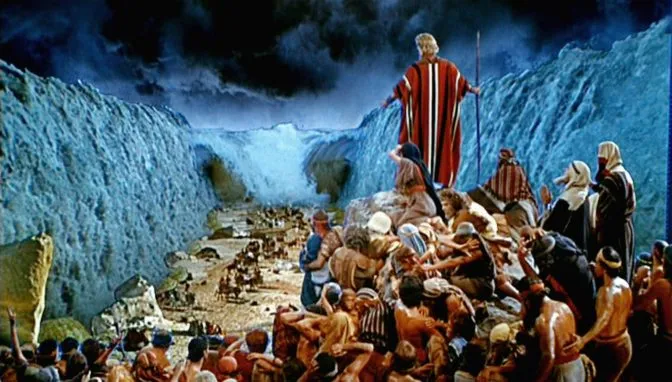
1 Corinthians 10:1-3 discusses the Israelites’ journey through the Red Sea, likening it to a form of baptism under Moses. The Israelites were under a cloud and passed through the sea, which is described as being baptized into Moses. They also shared in spiritual food.
This event symbolizes:
- Redemption for the Israelites, showcasing God’s protective care.
- Judgment for Pharaoh’s army, illustrating that this baptism is fundamentally an act by God, not human effort. The division of waters echoes the creation story, suggesting themes of new creation or rebirth through divine action.
1 Peter 3:21 uses the story of the Great Flood to explain baptism. Baptism is said to save you, not as a physical cleansing, but as an appeal for a good conscience through Christ’s resurrection.
Here, the flood signifies:
- Judgment on the sinful world but salvation for Noah’s family in the ark.
- Peter emphasizes that baptism is about spiritual purification through Christ, not just an external washing.
- The precise way baptism saves you in that God placed Noah and his family in the Ark and so He also places you in Christ. You, nor Noah, volunteered to be saved but God favored Noah and He favors you.
Both passages illustrate that baptism involves:
- Judgment for those not under God’s grace and provision of the ark/Christ.
- Redemption for those within His grace (Christ), highlighting God’s sovereign role in salvation.

Baptism, therefore, isn’t just a human response but a significant sign of God’s covenant with His people, similar to circumcision in the Old Testament, which was first a covenant sign of faith with Abraham. It aligns with other covenantal practices like Passover and the Lord’s Supper, each emphasizing God’s initiative in providing salvation and new life as well as judgment for those outside of the faithful covenant community.
If baptism truly reflects God’s work alone, it logically follows that infants should be included in receiving this covenant sign, just as they were with circumcision under Moses. The act of baptism or circumcision itself isn’t the point (but also not unimportant when rightly understood); rather, it’s about God’s commitment and promise to save through Christ, who is both our baptism and our circumcision:
- Colossians 2:9-12 “For in Him all the fullness of Deity dwells in bodily form, and in Him you have been made complete, and He is the head over all rule and authority; and in Him you were also circumcised with a circumcision made without hands, in the removal of the body of the flesh by the circumcision of Christ; having been buried with Him in baptism, in which you were also raised up with Him through faith in the working of God, who raised Him from the dead.”
Thus, baptism and circumcision are intrinsically linked in Christ, symbolizing the unity of God’s redemptive acts.
Let no one separate what God has joined together.
Leave a Reply