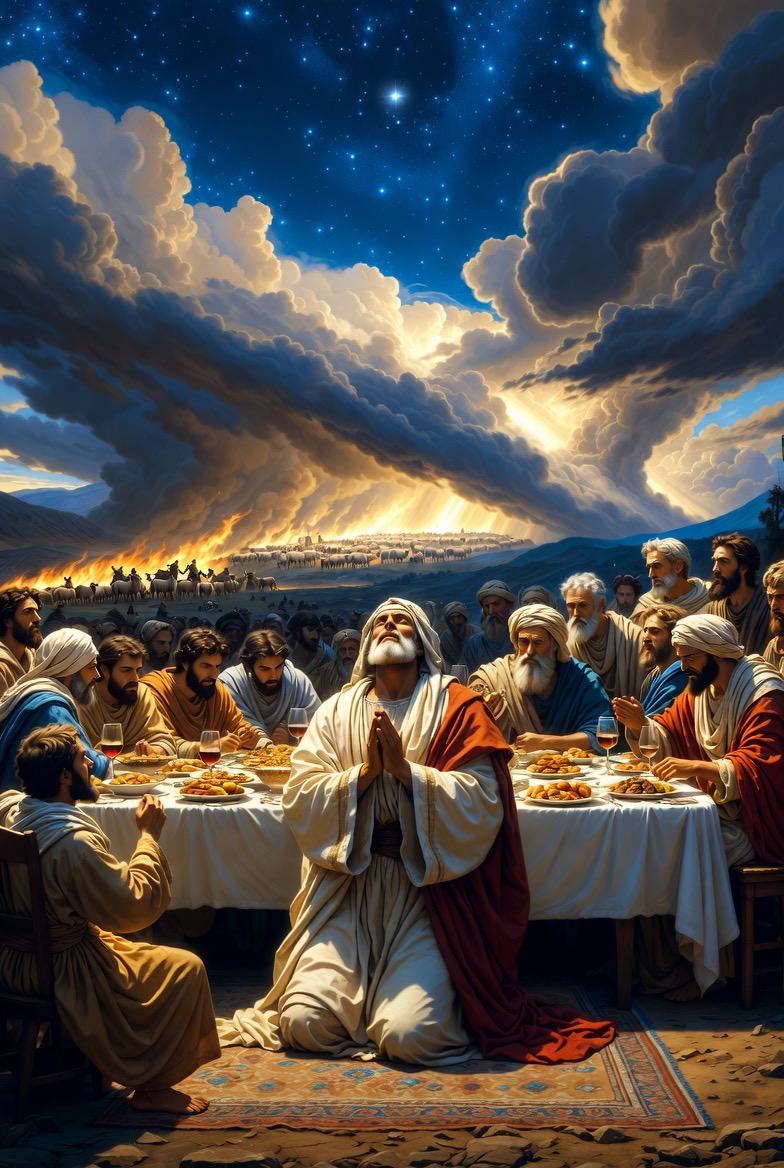
The Book of Job isn’t just a story—it’s a philosophical showdown, a poetic lament, and a divine revelation all rolled into one. Building on our look at chapters 6–8, let’s zoom out to the whole book. From the heavenly wager to the whirlwind theophany, Job explores why good people suffer, challenging pat answers and pointing to a deeper trust in God’s sovereignty.
Here’s a structured summary, focusing on the main arguments and rebuttals in each section.
Prologue: The Setup (Chapters 1–2)
Job, a blameless man from Uz, loses everything—children, wealth, health—due to Satan’s challenge to God: “Does Job fear God for nothing?” (1:9). God permits the tests, and Job responds faithfully:
“The Lord gave, and the Lord has taken away; blessed be the name of the Lord.” (1:21)
Even afflicted with sores, he refuses to curse God (2:10). His three friends—Eliphaz, Bildad, Zophar—arrive, sitting silently for seven days (2:13).
Job’s Opening Lament (Chapter 3)
Breaking the silence, Job curses his birth, wishing for oblivion (3:3–10). He questions why life is given to the miserable (3:20–23), setting a tone of existential despair.
Debate Cycles – Overview
| Cycle | Speaker | Key Argument | Job’s Rebuttal Highlights |
| First (4–14) | Eliphaz | Suffering = hidden sin; repent for blessing | Pain justifies complaint; friends unhelpful |
| Bildad | God is just; wicked perish like dry plants | Can’t argue with omnipotent God; wishes for hearing | |
| Zophar | Punishment less than deserved; repent | Mocks friends’ wisdom; life short—no hope after death | |
| Second (15–21) | Eliphaz | Job’s words impious; wicked live in fear | Friends miserable comforters; hope lingers |
| Bildad | Wicked trapped in darkness | “My Redeemer lives” (19:25) | |
| Zophar | Wicked’s joy short; ruin follows | Wicked often prosper—your doctrine fails | |
| Third (22–31) | Eliphaz | Accuses specific sins; repent for joy | Seeks God; why no justice for oppressed? |
| Bildad | Humans are worms before God | Praises God’s power; defends ethics; oath of innocence | |
| Zophar | (Silent) | — |
Elihu’s Intervention (Chapters 32–37)
Young Elihu critiques all parties: Suffering can teach, not just punish. He exalts God’s majesty in nature.
God’s Response and Job’s Humility (Chapters 38–42:6)
From a whirlwind, God questions Job on creation’s wonders (e.g., stars, beasts like Behemoth and Leviathan), highlighting human ignorance. Job repents:
“I have uttered what I did not understand.” (42:3)
Epilogue: Restoration (42:7–17)
God rebukes the friends, has Job pray for them, and restores him doubly.
The Big Picture
Job dismantles simplistic retributive theology, emphasizing mystery and trust. It’s a saga that resonates with anyone facing unexplained pain.

Soli Deo Gloria
Leave a Reply