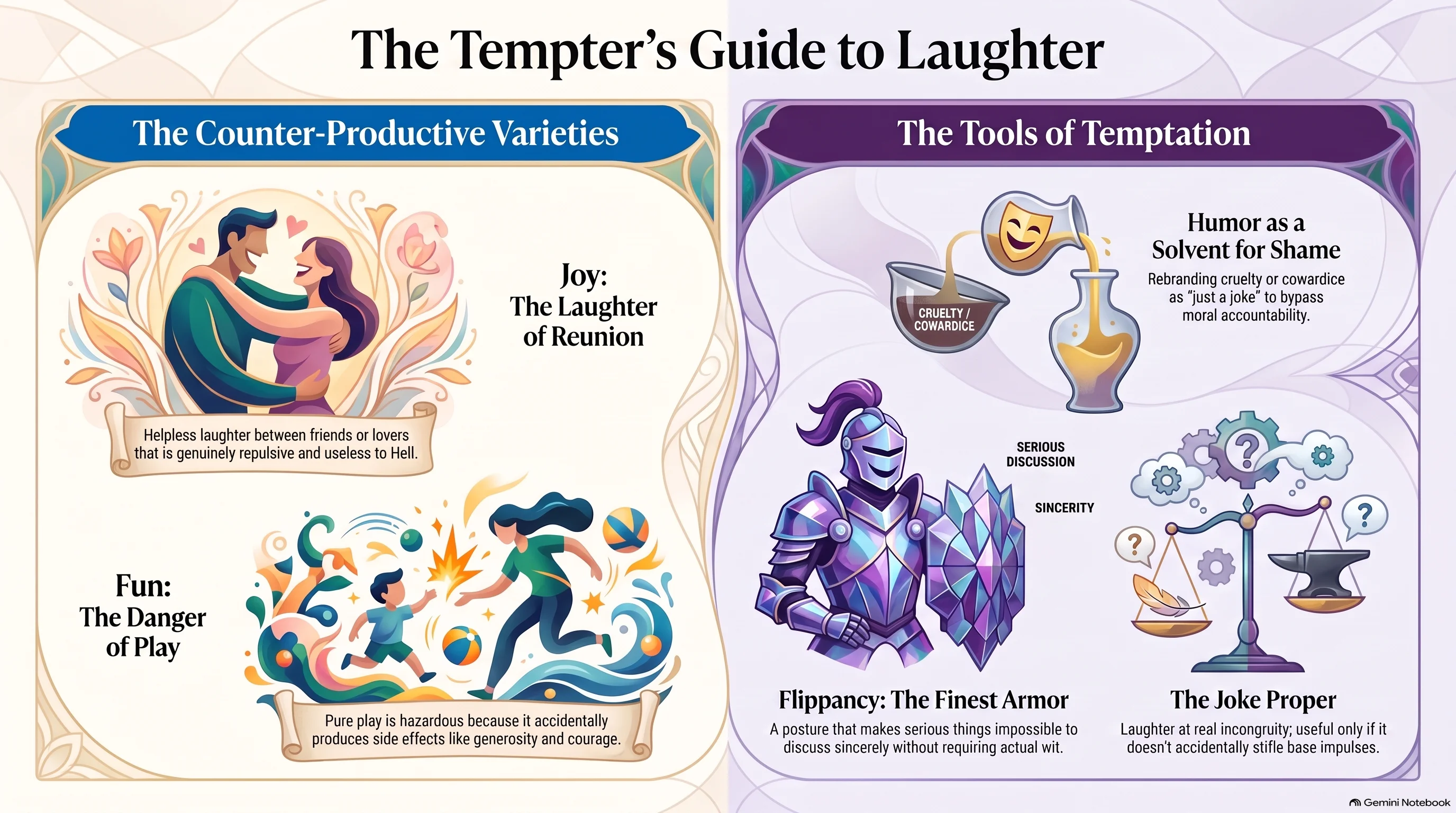
The patient’s new social circle laughs a lot, Wormwood reports, and Screwtape wants to correct a rookie mistake before it costs them anything: laughter is not automatically useful to hell. It matters enormously what kind.
Screwtape sorts human laughter into four categories, and rates each one for tempting purposes. Joy — the helpless laughter of friends reunited, lovers together — he can’t even explain and finds it genuinely repulsive, an insult to hell’s whole dignity; completely useless to their cause. Fun, the light froth of pure play, is nearly as bad, since it tends to produce generosity and courage as side effects. The Joke Proper — laughter at real incongruity — has some use, though Screwtape warns it’s overrated by lazy tempters who lean on crude humor without realizing some people’s sense of lust and sense of humor actually cancel each other out; know which type your patient is, and don’t guess wrong.
But the real gold, Screwtape says, is something subtler: how the English in particular treat “having a sense of humor” as practically a moral virtue, and lacking one as the one flaw they’re truly ashamed of. That reverence for humor makes it the perfect solvent for shame. A stingy man who lets others pay for him is mean — but joke about it, twist your friends for having been “scored off,” and suddenly you’re just a character. Cowardice is shameful, until it’s performed with enough comic exaggeration to become endearing. Cruelty is shameful, unless it gets successfully rebranded as a joke. Screwtape’s claim is blunt: far more damage gets done by people discovering they can get away with almost anything, so long as it can be passed off as funny, than by any amount of crude humor ever could.
And then there’s flippancy, which Screwtape rates highest of all — not because it’s clever, but because it’s cheap. Nobody actually has to make a real joke about virtue or faith; a flippant crowd just talks as if the joke’s already been made and everyone’s in on it. Kept up long enough, that posture builds what Screwtape calls the finest armor against God he knows of — because it doesn’t require wit, doesn’t sharpen the mind, and doesn’t even produce real affection between the people doing it. It just makes serious things permanently unable to be taken seriously.
Nothing here required an argument against faith. It required a room full of people who’d already silently agreed nothing was worth discussing sincerely.
Where This Shows Up Now
It’s the reflex to joke your way past a moment that actually called for honesty or apology. It’s a friend group where every serious subject gets pre-emptively deflected with irony, so nobody has to risk sounding earnest. It’s noticing how much social permission a genuinely unkind or selfish act gets, the moment it’s framed as a bit rather than said with a straight face.
For Discussion
- Where do you use humor to deflect a moment that actually deserved a sincere response?
- Screwtape says flippancy is the best defense against taking anything seriously. Is there a subject in your own life you’ve stopped being able to discuss without joking?
- What’s the difference, in your experience, between a real joke that illuminates something true and flippancy that just avoids it?
← Letter 10: Two Parallel Lives · The Wormwood Files (index) · Letter 12: The Gentle Slope →
Reading along? The Screwtape Letters is often available free or at a steep discount on Kindle. The price varies by edition, so check before you buy.
Leave a Reply