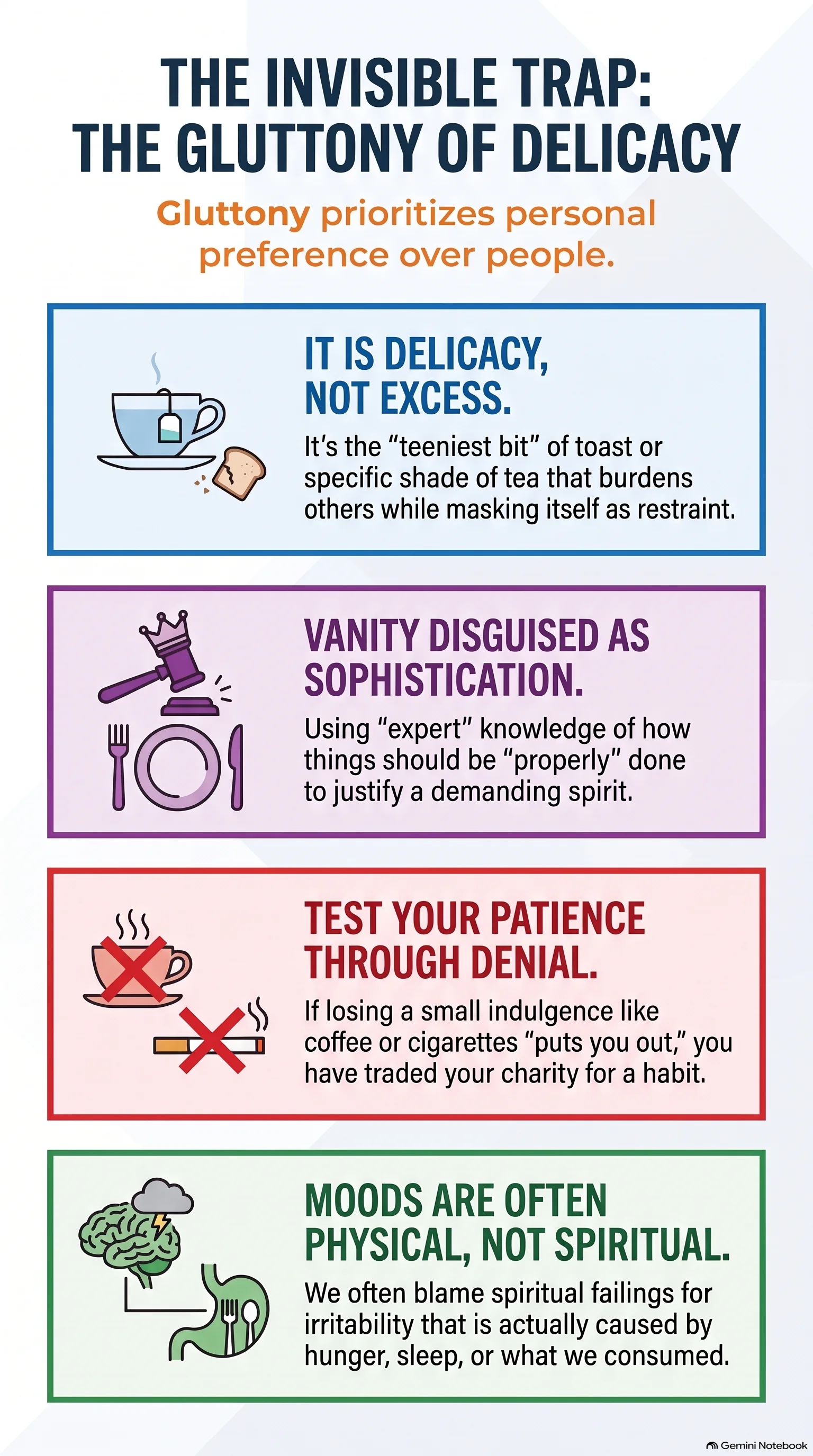
Wormwood apparently dismissed gluttony as a small-time tool, and Screwtape corrects him sharply. Modern culture, he says, has done hell an enormous favor over the last century — it’s gone almost silent on gluttony as a sin, because everyone still pictures it as gross overindulgence. Hell’s real success has been something quieter: the gluttony of delicacy, not of excess.
Screwtape’s example is devastating precisely because it’s so recognizable: the patient’s mother, a woman who never overeats, who in fact always asks for less than what’s offered — “just the teeniest weeniest bit of really crisp toast,” weak tea sent back if it’s the wrong shade of weak, a restaurant plate waved away as “far too much.” Because what she wants is small, she never once suspects she’s being gluttonous — at the exact moment she’s indulging her appetite, she genuinely believes she’s practicing restraint. But watch what that pickiness actually does to the people around her: servants quit, hostesses dread her, her son has lived his whole life absorbing the fallout of a woman convinced her only fault is caring too much about “having things nice.” Her stomach, in Screwtape’s phrase, has come to dominate her entire life — and it’s completely invisible to her, because the quantities are small.
Then Screwtape turns to the son himself, and the method shifts, because men fall for a different bait: not fussy pickiness, but vanity. Make him proud of knowing the one restaurant in town that cooks a steak “properly.” Let that pride slowly calcify into habit. Either way — his mother’s delicacy or his own vanity — the actual goal is the same: get him to a point where losing any single indulgence, tea, cigarettes, whatever it happens to be, genuinely “puts him out,” because a person who can be thrown off balance by a small denied pleasure has handed over his patience, his charity, and his obedience without ever noticing the trade.
The letter closes with a warning worth keeping in view for the rest of the series: keep the patient blind to the plain physical explanation for his own moods. Never let him connect a bad, irritable day to what he actually ate or drank the night before — let him instead wonder what spiritual failing might be behind his crankiness, when a much more boring answer was sitting on his own plate the whole time.
Where This Shows Up Now
It’s the person who insists they’re “easy, really — just something simple” and then quietly makes everyone around them work harder to meet an impossibly specific standard of simple. It’s food or coffee snobbery worn as a badge of sophistication rather than recognized as a minor tyranny over the people serving you. It’s blaming a bad mood on something spiritual or emotional when the honest answer might just be sleep, hunger, or what you had to drink.
For Discussion
- Do you know your own version of the “all I want” trap — a small, specific preference that quietly makes life harder for people around you?
- Screwtape says losing any one small indulgence “puts a person out” enough to compromise their patience and charity. Is there something like that in your own life?
- The letter ends by warning against ignoring the physical, medical explanation for a mood. How often do you check the boring explanation before reaching for a spiritual one?
← Letter 16: Becoming a Connoisseur of Churches · The Wormwood Files (index) · Letter 18: To Be Is to Compete →
Reading along? The Screwtape Letters is often available free or at a steep discount on Kindle. The price varies by edition, so check before you buy.
Leave a Reply