Isaiah 49 is a messianic passage, meaning it foretells aspects of the life and role of the Christ (the Messiah). It does so by contrasting the Messiah with the nation of Israel, which is depicted as rebellious, unfaithful, idolatrous, and unwilling to trust God—insisting instead on its own way.
Listen to Me, O islands, And pay attention, you peoples from afar. The Lord called Me from the womb; From the body of My mother He named Me. He has made My mouth like a sharp sword, In the shadow of His hand He has concealed Me; And He has also made Me a select arrow, He has hidden Me in His quiver. He said to Me, “You are My Servant, Israel, In Whom I will show My glory.” (Isaiah 49:1–3).
This passage emphasizes a key point: The Messiah—the Christ—is God’s true Servant, identified as “Israel.”
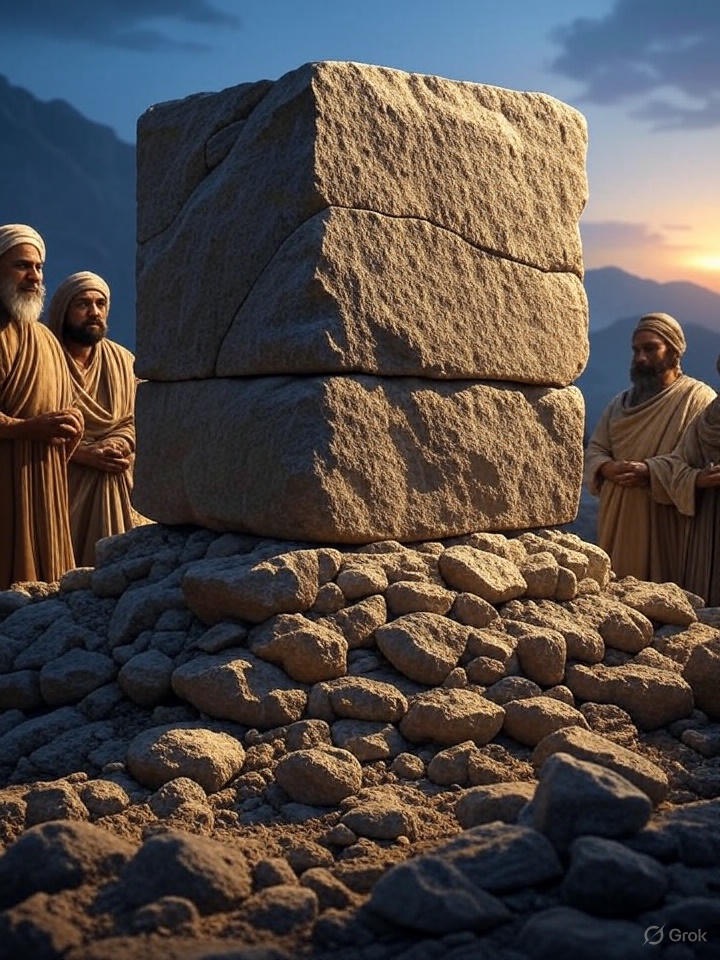
This helps explain why Jesus, after the people of Israel reject Him as their Messiah, quotes Scripture to them: Jesus said to them, “Did you never read in the Scriptures, ‘The stone which the builders rejected, This became the chief corner stone; This came about from the Lord, And it is marvelous in our eyes’? Therefore I say to you, the kingdom of God will be taken away from you and given to a people, producing the fruit of it. And he who falls on this stone will be broken to pieces; but on whomever it falls, it will scatter him like dust.” (Matthew 21:42–44).

Both Israel’s mission and Jesus’ mission involve bringing salvation to the world. However, Israel failed in this role, just as Adam failed in his. As a result, Jesus assumes both missions: redeeming humanity (as the new Adam – involving death) and providing redemption through a fulfilled law (as the true Israel – involving resurrection to life).
Isaiah clearly outlines this mission, applying it to Jesus rather than to the nation of Israel, which refused and failed to fulfill it: He says, “It is too small a thing that You should be My Servant To raise up the tribes of Jacob and to restore the preserved ones of Israel; I will also make You a light of the nations So that My salvation may reach to the end of the earth.” (Isaiah 49:6).
Once again, the focus here is on the Messiah, not the nation of Israel. Similarly, the object of God’s wrath in the chapter relates to those who oppose Jesus the Messiah, not the nation itself.
In fact, God’s wrath is promised to unbelievers of all kinds for rejecting His Messiah: “I will feed your oppressors with their own flesh, And they will become drunk with their own blood as with sweet wine; And all flesh will know that I, the Lord, am your Savior And your Redeemer, the Mighty One of Jacob.” (Isaiah 49:26).
Despite all the confusion there is today about the nation of Israel, they too have no hope in this world apart from trust in their Messiah. God didn’t replace Israel but He did break off the unbelieving parts, added new and different branches into Israel His Messiah and did what the nation of Israel failed to do.
Getting this right clears up much of the path moving forward. God favors one people, those whom he laid down His life for. They are Israel because He is Israel and no special ethnicity required.
In fact, being reborn by His Spirt provides the only eternal pedigree that matters.

Leave a Reply